
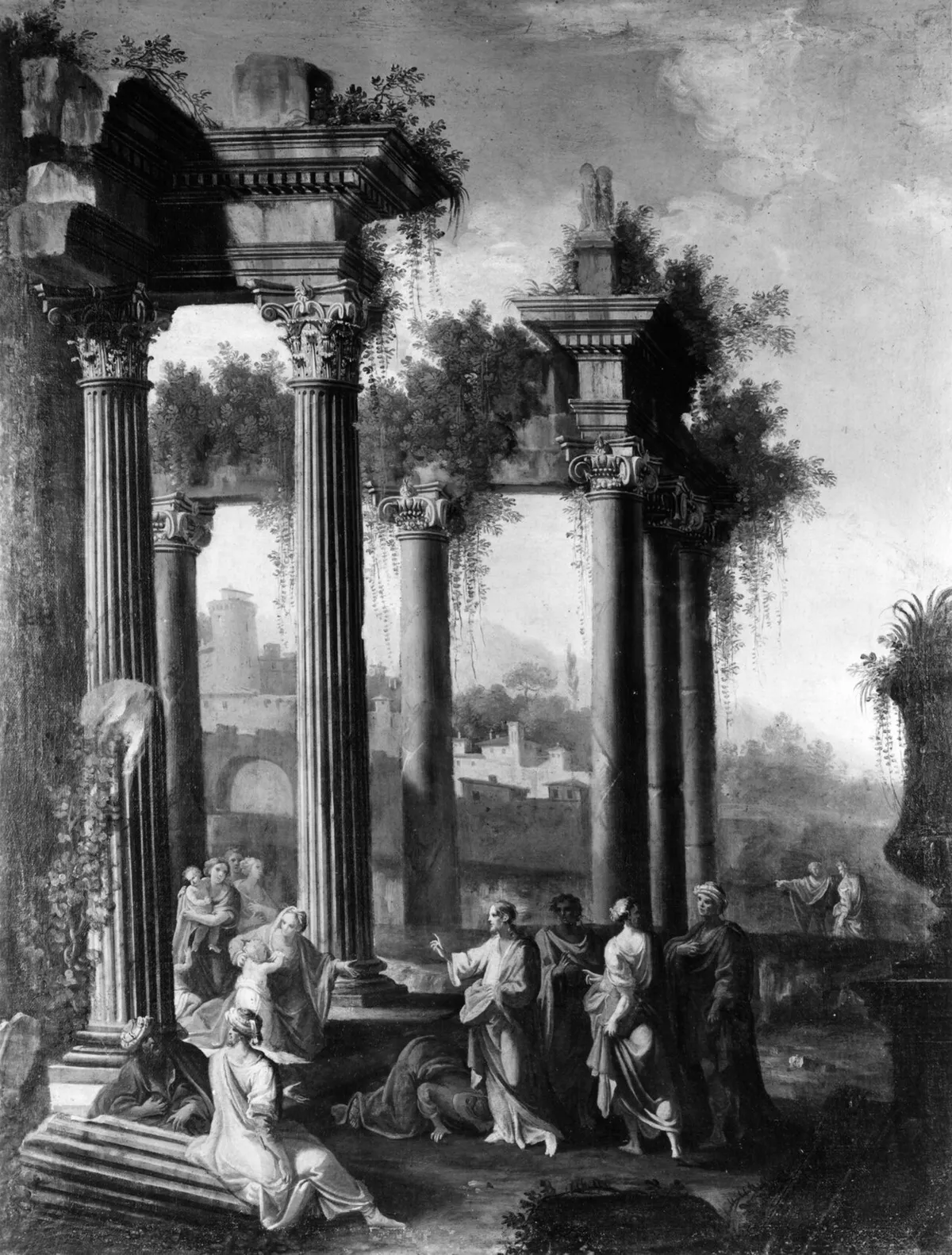
Imagine being called out for not washing your hands before a meal. In Mark 7, that's exactly what happens as Jesus faces criticism from the Pharisees for his disciples' lack of ritual handwashing. But this chapter reveals so much more than just hygiene.
The Reading: Mark 7
World English Bible1 Then the Pharisees and some of the scribes gathered together to him, having come from Jerusalem.
>
2 Now when they saw some of his disciples eating bread with defiled, that is unwashed, hands, they found fault.
>
3 (For the Pharisees and all the Jews, don’t eat unless they wash their hands and forearms, holding to the tradition of the elders.
>
4 They don’t eat when they come from the marketplace unless they bathe themselves, and there are many other things, which they have received to hold to: washings of cups, pitchers, bronze vessels, and couches.)
>
5 The Pharisees and the scribes asked him, “Why don’t your disciples walk according to the tradition of the elders, but eat their bread with unwashed hands?”
>
6 He answered them, “Well did Isaiah prophesy of you hypocrites, as it is written, ‘This people honors me with their lips, but their heart is far from me.
>
7 But they worship me in vain, teaching as doctrines the commandments of men.’
>
8 “For you set aside the commandment of God, and hold tightly to the tradition of men—the washing of pitchers and cups, and you do many other such things.”
>
9 He said to them, “Full well do you reject the commandment of God, that you may keep your tradition.
>
10 For Moses said, ‘Honor your father and your mother;’ and, ‘He who speaks evil of father or mother, let him be put to death.’
>
11 But you say, ‘If a man tells his father or his mother, “Whatever profit you might have received from me is Corban, that is to say, given to God”;’
>
12 then you no longer allow him to do anything for his father or his mother,
>
13 making void the word of God by your tradition, which you have handed down. You do many things like this.”
>
14 He called all the multitude to himself, and said to them, “Hear me, all of you, and understand.
>
15 There is nothing from outside of the man, that going into him can defile him; but the things which proceed out of the man are those that defile the man.
>
16 If anyone has ears to hear, let him hear!”
>
17 When he had entered into a house away from the multitude, his disciples asked him about the parable.
>
18 He said to them, “Are you also without understanding? Don’t you perceive that whatever goes into the man from outside can’t defile him,
>
19 because it doesn’t go into his heart, but into his stomach, then into the latrine, thus purifying all foods?”
>
20 He said, “That which proceeds out of the man, that defiles the man.
>
21 For from within, out of the hearts of men, proceed evil thoughts, adulteries, sexual sins, murders, thefts,
>
22 covetings, wickedness, deceit, lustful desires, an evil eye, blasphemy, pride, and foolishness.
>
23 All these evil things come from within, and defile the man.”
>
24 From there he arose, and went away into the borders of Tyre and Sidon. He entered into a house, and didn’t want anyone to know it, but he couldn’t escape notice.
>
25 For a woman, whose little daughter had an unclean spirit, having heard of him, came and fell down at his feet.
>
26 Now the woman was a Greek, a Syrophoenician by race. She begged him that he would cast the demon out of her daughter.
>
27 But Jesus said to her, “Let the children be filled first, for it is not appropriate to take the children’s bread and throw it to the dogs.”
>
28 But she answered him, “Yes, Lord. Yet even the dogs under the table eat the children’s crumbs.”
>
29 He said to her, “For this saying, go your way. The demon has gone out of your daughter.”
>
30 She went away to her house, and found the child having been laid on the bed, with the demon gone out.
>
31 Again he departed from the borders of Tyre and Sidon, and came to the sea of Galilee, through the middle of the region of Decapolis.
>
32 They brought to him one who was deaf and had an impediment in his speech. They begged him to lay his hand on him.
>
33 He took him aside from the multitude, privately, and put his fingers into his ears, and he spat, and touched his tongue.
>
34 Looking up to heaven, he sighed, and said to him, “Ephphatha!” that is, “Be opened!”
>
35 Immediately his ears were opened, and the impediment of his tongue was released, and he spoke clearly.
>
36 He commanded them that they should tell no one, but the more he commanded them, so much the more widely they proclaimed it.
>
37 They were astonished beyond measure, saying, “He has done all things well. He makes even the deaf hear, and the mute speak!”
What This Chapter Is Really Saying
The Challenge of Tradition
In this chapter, Jesus is confronted by the Pharisees and scribes who come from Jerusalem. They notice that some of his disciples are eating without washing their hands, which was a strict tradition among the Jews. Instead of backing down, Jesus uses this moment to call out their hypocrisy.
Jesus quotes the prophet Isaiah, emphasizing that the Pharisees honor God with their lips, but their hearts are far from Him. He accuses them of prioritizing human traditions over God's commandments, highlighting how they twist the command to honor parents for their own convenience.
True Defilement
Next, Jesus turns his attention to the crowd, explaining that it's not what goes into a person that defiles them, but what comes out of their heart. He lists various sins that stem from within: evil thoughts, theft, and pride, showing that true purity comes from one's inner being, not external rituals.
Encounter with a Syrophoenician Woman
Then, we see a shift in scene as Jesus travels to Tyre and Sidon. Here, a Gentile woman, desperate for her daughter's healing, approaches him. Jesus initially responds in a way that seems dismissive, suggesting that his mission is first for the Jews. Yet, the woman cleverly replies that even the dogs under the table get the crumbs. Impressed by her faith, Jesus grants her request, healing her daughter.
Healing the Deaf Man
Finally, Jesus returns to the region of Decapolis, where he heals a deaf man with a speech impediment. Using intimate gestures, he opens the man's ears and loosens his tongue, showing that Jesus often meets people in personal, unique ways. After this miracle, the crowd can't help but spread the news about him, marveling at his power.
Why It Matters
Questioning our Traditions
Mark 7 invites us to reflect on the traditions we hold. Are they enhancing our faith or distracting us from the essence of what God desires? Jesus challenges us to prioritize our hearts over rituals and to ensure our actions align with true worship.
The Importance of Faith
The Syrophoenician woman's faith teaches us that persistence and boldness in seeking help can lead to powerful outcomes. She didn't let barriers stop her, demonstrating that faith can transcend cultural and social boundaries.
Inner Purity
Jesus reminds us that our character and actions are a reflection of our inner state. Rather than focusing solely on external appearances or rituals, we should cultivate virtues like love, kindness, and humility from within.
If you're looking to connect with others and deepen your faith journey, consider using Sancta to find a church near you and discover a community that values inner purity and genuine worship.
Coming Up Next: Mark 8
As we move into Mark 8, get ready for more astonishing miracles and profound teachings. Jesus will not only feed a multitude but also challenge his disciples in ways they never expected. Join us for the next part of this incredible journey.